Autumn Migrations: Tracking Elephant Herds in the Kruger
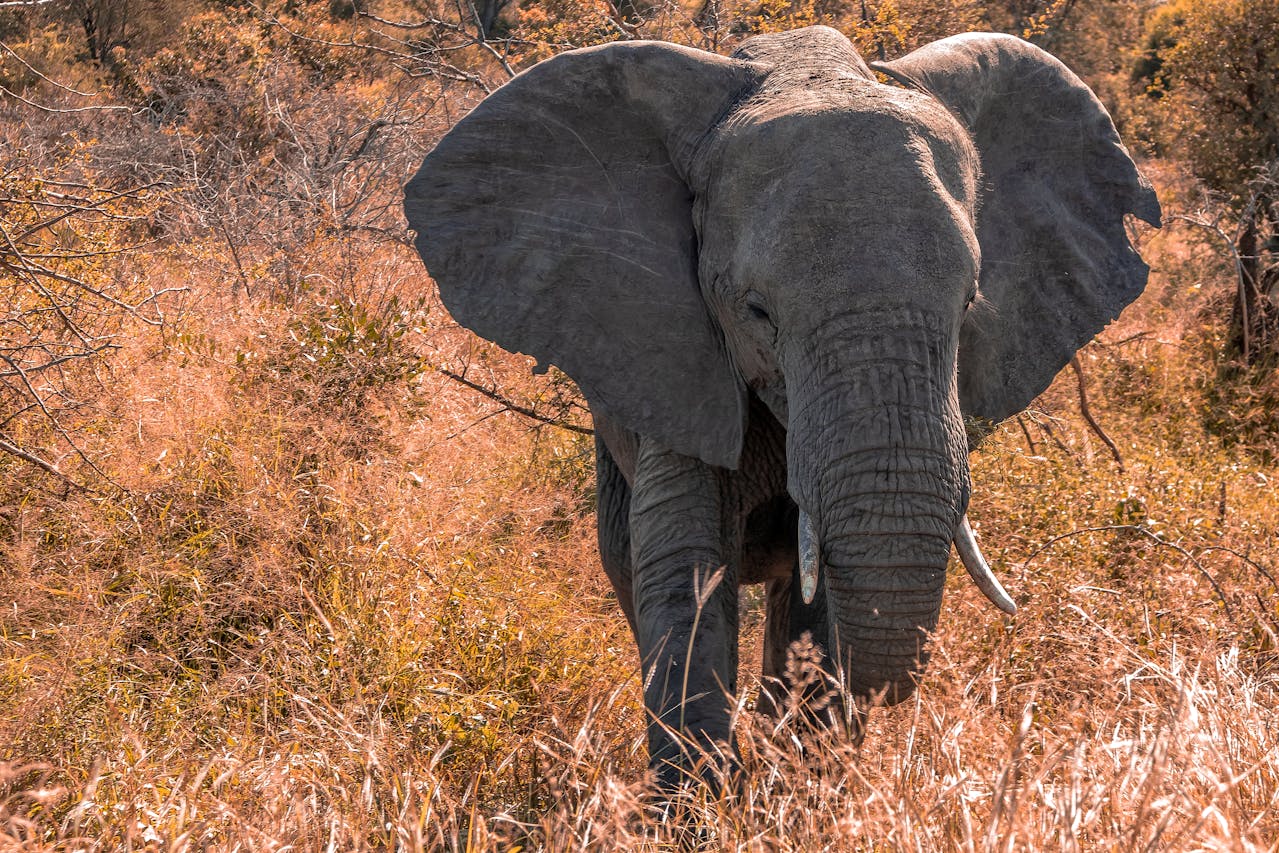
Watching elephants moving through the busg is something that you never quite get over. No matter how many times you pass one of these majestic animals, the feeling is always the same, and it is always one of absolute awe.
As the seasons are changing once again, and autumn is knocking, the Kruger’s very best time is only just beginning.
Autumn in the Kruger is when you’ll get to see an abundance of wildlife, elephants in particular, and for those who know where to look, it is one of the most rewarding wildlife experiences southern Africa has to put forward.
The elephants of the Kruger are not simply large animals passing through a landscape.
They are the very architects of it, with their migratory movements forcing changes in the bushveld, breaking trees and scrub and making way for other animals to move.
And autumn, when the dry season begins to tighten its grip and water sources begin to concentrate, is when their movements become most deliberate, most readable, and the most spectacular for those on a Kruger Park safari.
Why Autumn is A Season of Change
Autumn in the Kruger, broadly from April through June, marks the transition from the wet season’s overgrown look to the dry season’s lean clarity.
Grasses recede. Foliage thins. And the bush opens up in ways that make wildlife viewing so much more rewarding, and elephant herds, which can number anywhere from ten to several hundred individuals, become easier to track as they gravitate toward permanent water sources.
The Kruger is home to one of the largest elephant populations on the continent.
The most recent estimates place the park’s elephant population at approximately 17 000 to 19 000 animals, a figure that has only been possible thanks to decades of careful conservation management.
These animals are organised into complex family units led by a matriarch, typically the oldest and most experienced female in the group, whose memory of water locations and seasonal routes is passed down across generations.
It is this inherited knowledge that drives their autumn movement patterns. The Olifants, Sabie, and Crocodile rivers are all focal points as the season progresses, and herds that have spent the wet months spread across the park begin to consolidate near these corridors.
Reading the Herd and What to Watch For
Experienced guides in the Kruger will tell you that watching elephants well requires slowing down. The instinct is to arrive, photograph, and move on to the next sighting, but those who stay and enjoy some time watching the elephants they come across are the ones who have the most memorable experiences.
A relaxed herd will feed slowly, breaking branches and nibbling leaves, rumble softly among themselves, and allow younger elephants to play at the edges of the group.
These low-frequency vocalisations, many of them below the threshold of human hearing, are how elephants maintain contact across distances of several kilometres, and researchers have documented that elephants can recognise the calls of over 100 other individuals, a level of social awareness that is remarkable by any measure.
Bull elephants, which largely live apart from family herds, are more commonly seen during the dry season when they too concentrate near water.
A bull in musth, a state of heightened testosterone that occurs periodically in mature males, will display with raised head, streaming temporal glands, and a particular rolling gait.
Guides can reliably identify musth, and understanding what one is observing can turn a sighting from impressive and perhaps a little intimidating to absolutely fascinating.

The Lowveld Landscape and Elephant Ecology
The Lowveld region that cradles the Kruger is one of the few places in Africa where elephant ecology can be observed on a large scale.
The park’s size, nearly two million hectares, allows for movement patterns that smaller reserves simply cannot accommodate, and the ecological relationship between elephants and the landscape is visible in real time.
Elephants are considered a keystone species precisely because their behaviour reshapes habitat for every other animal in the system.
A herd pushing through mopane scrub opens clearings that benefit smaller browsers. Wallowing in riverbeds creates pools that persist long after the herd has moved on. Trees pushed over in the dry season become feeding platforms for impala and kudu in the weeks that follow. The chain of consequence is long and elegant.
Autumn is also when the impact of elephants on the landscape is most visible.
With foliage thinned, the evidence of feeding, bark stripping, and soil disturbance reads clearly against the dry earth. For anyone with an interest in how ecosystems function, it is a particularly instructive time to be in the park.
Plan Your Kruger Autumn with GAP Tours
Seeing the elephants of the Kruger at their most active requires the right timing, the right routes, and guides who understand animal behaviour well enough to position a vehicle with intention rather than luck.
GAP Tours specialises in exactly this kind of thoughtful, informed access to the Kruger’s wildlife.
Our Kruger itineraries are built around the natural flow of the park, not a fixed script, which means guests on safari in autumn are taken to the places where elephant activity is most concentrated at that point in the season.
Visit www.gaptours.co.za to explore our Kruger itineraries and plan an autumn experience worth remembering.
Frequently Asked Questions
When is the best time to see elephants in the Kruger National Park?
The dry season, from approximately May through October, is the most reliable time to see large elephant herds in the Kruger. As water sources reduce, herds concentrate near rivers and waterholes, making sightings more frequent and more prolonged. Autumn, from April to June, is particularly rewarding as the bush begins to open up and herds start their seasonal movement toward permanent water.
How many elephants live in the Kruger National Park?
Current estimates place the Kruger’s elephant population at between 17,000 and 19,000 individuals, making it one of the largest protected elephant populations in Africa. The park manages this population through a combination of monitoring, contraception in select areas, and transfrontier conservation agreements with neighbouring Mozambique and Zimbabwe under the Great Limpopo Transfrontier Park arrangement.
What is musth in elephants and why does it matter for visitors?
Musth is a periodic condition in mature bull elephants characterised by elevated testosterone levels, increased aggression, and distinctive physical signs including fluid secretion from the temporal glands and a particular gait. Bulls in musth are unpredictable and require greater viewing distance. Experienced Kruger guides can identify musth reliably and will adjust positioning accordingly, making guide expertise particularly important when large bull elephants are encountered.
Do elephants in the Kruger follow predictable seasonal migration routes?
Yes, broadly. The elephants of the Kruger follow seasonal patterns driven by water availability and foliage. During the wet season they spread widely across the park. As the dry season progresses they consolidate near the major river systems, particularly the Olifants, Sabie, and Crocodile rivers. Matriarchs carry generational knowledge of these routes, and experienced guides familiar with these patterns can anticipate where herds are likely to be at different points in the year.